
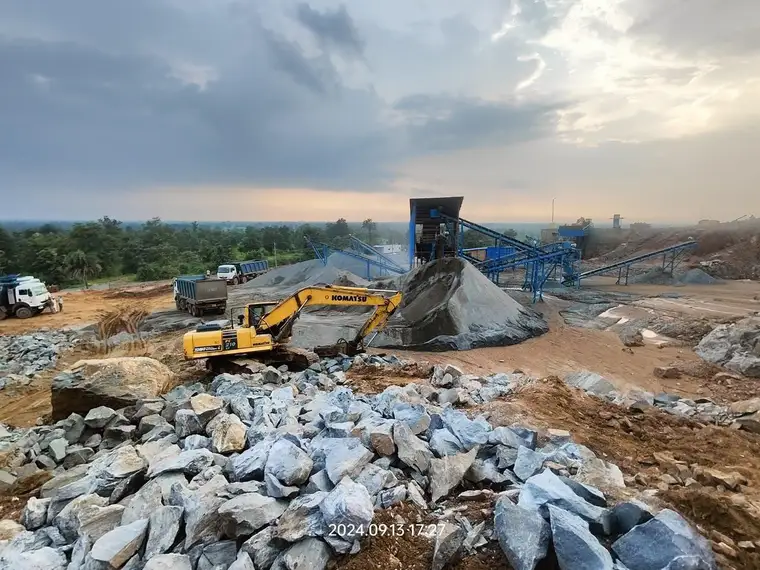
Crusher Plant Operations
- 6 plants, all owned
- Erected and commissioned by us
- Our operators, not agency labour
- Wear parts are our cost
Very few contractors actually want a crusher. They want what comes out of one.
What a site needs is graded stone at the road head, at a rate that was agreed in writing, and one number to ring when a cone liner goes on the night shift. Buying the machine gives you none of that. It gives you tied-up capital, a lease to renew, clearances to chase, an operator on the payroll between packages, and an asset that stops earning the week the last layer is down.
So the arrangement here is simpler. One of our six plants comes to your site. We erect it, man it, feed it and keep it running, and what crosses to you is material and a weighed docket. The machine, the wear parts, the crew and the hours lost to a breakdown stay on our side.
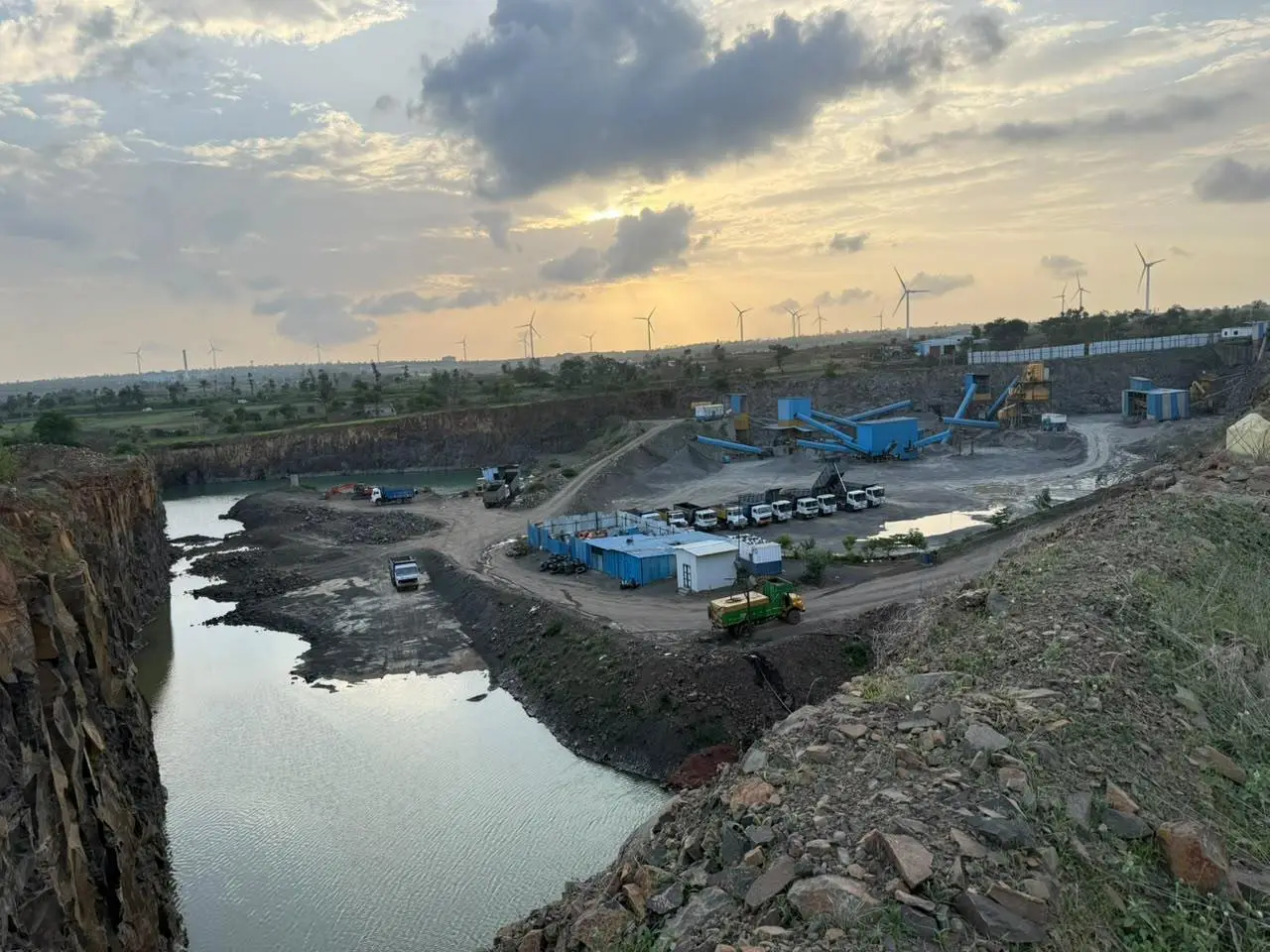
What we bring to the site
- 01
Six plants, and they are ours
Bought, paid for and carried on our own books. A hired plant answers to whoever pays the hire that month, which is how a machine walks off a site in week three. Ours does not walk.
- 02
Erection and commissioning included
Foundations, structure, wiring, belts, trial run. A fortnight from the low-beds arriving to material coming off the last conveyor, provided a loaded trailer can physically reach the standing area.
- 03
Our own operators
Operator, jaw and cone attendants, electrician, fitter, all arriving with the plant. They have run this machine before. Nobody is learning the panel in week one because bodies were found at the district headquarters the week production was due.
- 04
Wear parts sit on our side of the line
Jaw plates, cone liners, screen mesh, belts and bearings are stored at the plant and reordered before they run out. A liner that fails costs a shift. A liner ordered only after it fails costs about three weeks, which is the difference between a slow day and a stopped programme.
- 05
Weighbridge on site
Nothing leaves without crossing a bridge, and nothing is billed that a docket does not cover. Ten calibrated weighbridges across our operations, because a bridge costs less than one argument over a month of dispatch.
- 06
Output you can plan against
The fleet dispatches 120,000 MT in a month. A single 250 TPH three-stage plant holds 25,000 to 30,000 MT over the same period on two shifts, so six plants can carry more than that figure and usually are not asked to. Plan backwards from the per-plant number, which is the one that constrains your programme.
How a job actually runs
- 01
Site visit
Somebody from our side walks the ground: source rock, the state of the access road, whether there is level standing for a plant. It is also where the lead distance to the road head gets measured instead of estimated.
- 02
Plant selection
Which of the six suits your rock and the grading you are contracted to. Hard basalt and soft sandstone want different closed-side settings and eat wear parts at different rates.
- 03
Move and erect
Stripped down, trailered to site, foundations cast, structure raised again, cable run and terminated. Two weeks or thereabouts.
- 04
Commissioning
Dry run first, then decks screened to the grading in your contract. Samples drawn and tested before a tonne is invoiced.
- 05
Production
Two shifts is the norm and a third goes on when the programme is tight. Output and dispatch figures reach you daily, against what you asked for rather than what we managed.
- 06
Demobilisation
Plant down, yard cleared, ground handed back. Our steel leaves with us, which sounds obvious until you have seen what gets abandoned at the end of a package.
Crusher plants questions
01What does a plant on our site actually cost us?
The rate is per tonne of finished material, built off two things: the grading you need and the tonnage you need each month. Erection, operators, maintenance and wear parts are inside that figure already. Power or genset diesel, royalty and transit passes usually are not, because who carries them depends on whose lease the rock is coming off. That gets settled on a call instead of guessed at on a web page.
02How long from order to steady production?
Call it a month where access is reasonable. Two weeks to move the plant and machines in, two more to erect and commission. A bad approach road, starting in the middle of the rains or a lease still waiting on clearance will stretch it, and you will get the revised date from us before signature rather than in week three.
03Can you run a plant we already own?
We do. If yours is standing idle between packages, or running well under the tonnage it was bought to hold, put it to us. Our crews and our maintenance routine on your asset, with the output figure still ours to answer for.
04What happens when the plant breaks down?
Wear parts are already in the store, and the fitter and electrician are on the site rather than two districts away at the end of a phone. Most stoppages last a shift. A structural failure or a serious mechanical one is our bill and our night without sleep, which is the only reason the arrangement is worth anything to you.
Guides on crusher plants
All guides- Crusher plant bought, hired or run on contract: which suits a highway package5 min
- What a 250 TPH crusher plant really produces in a day and a month4 min
- Crushing rate per tonne: what is inside the figure and what is not4 min
- Setting up a stone crusher plant on a project site: land, power, consents and time5 min
- Dust control at a stone crusher: what the pollution board checks4 min
- Captive quarry or bought-in aggregate: the decision on a highway package4 min
- Jaw, cone and VSI: what each stage of a three-stage plant does5 min
- How much GSB and WMM a kilometre of road needs3 min
- Vetting an aggregate supplier before a rate contract: nine checks3 min
- Moving a crusher plant between sites: what the relocation involves4 min
- Monsoon on a highway package: what to stockpile and what to stop4 min
- Drilling, blasting, crushing and haulage: one subcontractor or four3 min
Usually goes with
Stone Crushing & Aggregate Production
Shot rock in at one end. GSB, WMM and clean 40, 20 and 10mm chips out at the other. Three stages at 250 to 350 TPH, and a sieve result that holds load after load.
Aggregate Supply
Loaded at our plants, hauled on our own tippers, tipped at your road head. One rate per tonne delivered, with a weighbridge docket riding on every load.
Get a rate
Need crusher plants on your site?
Enough to price the job properly, and enough to say honestly if we cannot take it. Send it before 6pm and you will hear back the same day.
- Location
- and the lead to the road head
- Grading
- GSB, WMM, 40 / 20 / 10mm
- Tonnage
- a month, not in total
- Start date
- and how firm it is
Not ready for a rate? The questions buyers ask cover capacity, how long mobilising takes, leases and how billing works.
Read those firstOr call +91 93093 43222 · Monday to Saturday, 9am to 6pm