
The short answer
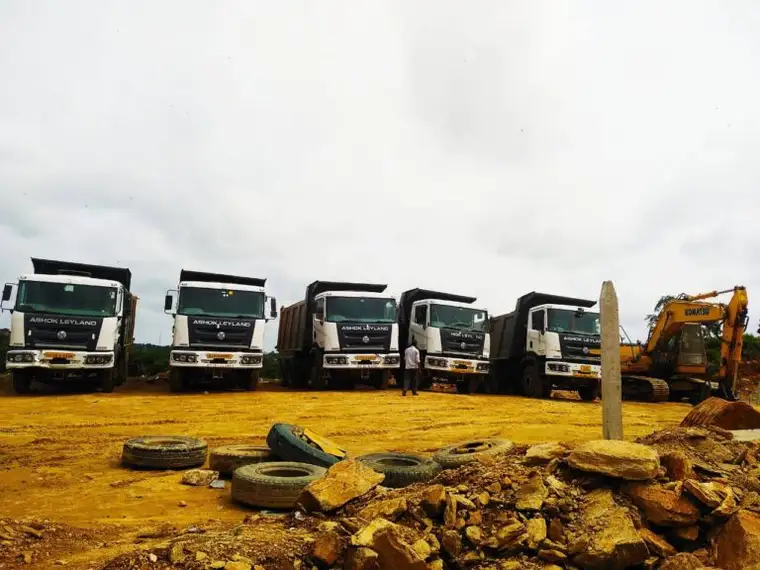
A 6-wheel, two-axle tipper has a legal gross weight of 18.5 tonnes and carries about 10 to 11 tonnes. A 10-wheel, three-axle tipper is 28 tonnes gross and carries about 17 to 18.5. A 12-wheel, four-axle tipper is 35 tonnes gross and carries about 22 to 23.5. Payload is gross weight minus the truck's own weight, so the registration certificate of the actual vehicle is the final word.
A tipper has two capacities, and they do not agree. One is the volume of its body. The other is the weight the law lets it carry. With stone, the weight limit is reached long before the body is full.
01Gross weight, payload and volume
| Tipper | Axles | Legal gross weight | Typical payload | 20 mm aggregate at that payload |
|---|---|---|---|---|
| 6-wheeler | 2 | 18.5 t | 10 to 11 t | About 7 m3, or 2.4 brass |
| 10-wheeler | 3 | 28 t | 17 to 18.5 t | About 11.5 m3, or 4 brass |
| 12-wheeler | 4 | 35 t | 22 to 23.5 t | About 14.5 m3, or 5.2 brass |
| 14-wheeler and above | 5 | 42 t or more, by configuration | 27 t and up | About 17.5 m3, or 6.2 brass |
Gross weights follow the axle loads notified by the Ministry of Road Transport and Highways in 2018. Payloads are typical and depend on the chassis and body. Volumes assume loose 20 mm aggregate at 1.55 tonnes per cubic metre.
The gross figure comes from adding up the permitted load on each axle: 7 tonnes on a single front axle, 11.5 on a single axle with four tyres, 21 on a tandem pair. A three-axle tipper is one front axle and one tandem, which gives 28 tonnes.
02A full body is an overloaded truck
A common 10-wheel tipper has a body of 14 to 16 cubic metres. Filled level with 20 mm aggregate at 1.55 tonnes per cubic metre, a 16 cubic metre body holds nearly 25 tonnes. The legal payload is about 18. The body was sized so that the same truck can carry lighter material, and stone is not light.
So a correctly loaded stone tipper looks under-filled, with the load well below the top of the sides. A truck heaped above them is carrying a third more than it should. Everybody at a plant yard knows what a legal load looks like. The weighbridge is there to make sure.
03What overloading costs
- The fine. Under section 194 of the Motor Vehicles Act, Rs 20,000 plus Rs 2,000 for every tonne over the limit, plus the cost of off-loading. The vehicle may not move until the excess is removed.
- The pass. A mineral transit pass states a quantity. A truck carrying more than its pass is carrying unaccounted mineral, which is a separate offence under the state's mining rules.
- The truck. Springs, tyres, brakes and the tipping gear are designed for the rated load. Overloaded tippers wear all four faster and stop in a longer distance.
- The road. Damage to a pavement rises steeply with axle load, far faster than the load itself. The haul road, the village road and the new highway all pay for it.
- The insurance. A claim after an accident with an overloaded vehicle is an argument the owner starts from behind.
04How many loads
| Tipper | Payload used | Loads per 1,000 t |
|---|---|---|
| 6-wheeler | 10.5 t | 96 |
| 10-wheeler | 18 t | 56 |
| 12-wheeler | 23 t | 44 |
Bigger trucks mean fewer trips and fewer drivers. They also need wider haul roads, stronger culverts and more room to turn at the tipping point. On a narrow village road or a tight road head the 10-wheeler is often the largest truck that can work, which is why it remains the standard tipper on highway packages. Turning loads into a fleet size is covered in how many tippers a job needs.
05Check the certificate, not the brochure
Two tippers that look identical can have different registered weights, depending on the chassis variant, the body fitted and the year of registration. The registration certificate states the gross vehicle weight and the unladen weight, and the difference is the lawful payload. When hiring trucks or checking a supplier's fleet, ask for the certificate and for a recent tare weight off a bridge. The conversions between tonnes, cubic metres and brass are in brass, cft, cubic metre and tonne.